
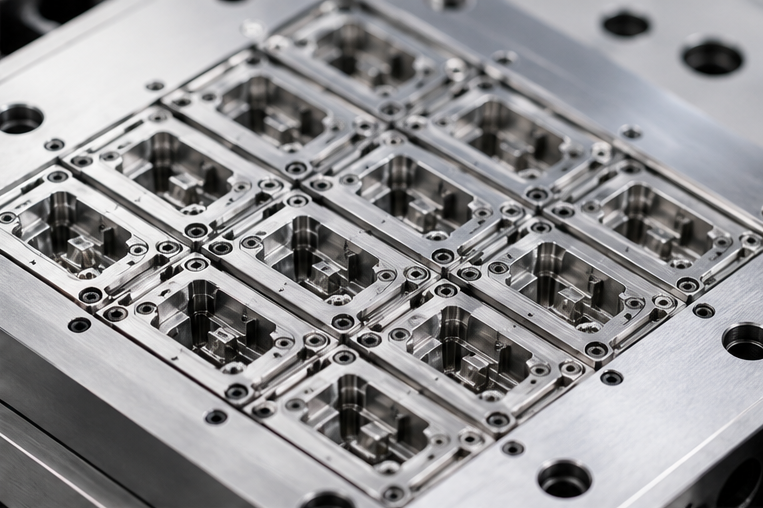
Precision plays a critical role in modern manufacturing. Across industries such as medical, packaging, aerospace, defence and specialist engineering, component performance often depends on achieving exact dimensions and maintaining consistency across production runs.
Even small variations can influence fit, functionality and long term reliability. This is where tight tolerance machining becomes important. For manufacturers working within demanding environments, precision is not simply a quality objective. It is often essential to performance.
This guide explores why tight tolerance machining matters and the role it plays within high performance manufacturing.
What Is Tight Tolerance Machining?
Tolerance refers to the acceptable variation allowed between a component’s actual dimensions and its intended design specification. Tight tolerance machining involves manufacturing components to extremely precise limits with minimal deviation.
Examples may include:
- Micron level tolerances
- Complex geometries
- High precision surfaces
- Controlled dimensional requirements
The tighter the tolerance, the smaller the permitted variation. Achieving this consistently requires advanced machining capability, process control and precision inspection.
Why Precision Matters in High Performance Manufacturing
Many modern products rely on components fitting and functioning perfectly.
Small dimensional differences may lead to:
- Reduced efficiency
- Increased wear
- Performance issues
- Assembly challenges
- Reliability concerns
As manufacturing becomes more advanced, tolerance requirements often become more demanding. Precision engineering therefore plays an increasingly important role.
Supporting Accurate Component Assembly
Components rarely operate in isolation. Many parts function within larger assemblies where alignment and compatibility are essential.
Tight tolerances help support:
- Accurate assembly
- Reliable fit
- Reduced variation
- Improved system performance
Where multiple precision components interact, dimensional consistency becomes critical. Even minor inaccuracies may influence the final product.
Improving Performance and Reliability
High performance environments often place significant demands on components.
Factors such as:
- Speed
- Pressure
- Temperature
- Repetition
- Mechanical load
can all affect performance.
Precision machining helps support reliability by ensuring components operate as intended. This can reduce the likelihood of premature wear or failure.
The Role of Tight Tolerances in Specialist Industries
Medical Manufacturing
Medical components frequently require extremely high levels of precision.
Dimensional accuracy supports:
- Product performance
- Repeatability
- Reliability
- Compatibility
Small variations may affect assembly or functionality.
Packaging and High Speed Production
Production environments operating at speed depend on accurate tooling and components.
Precision supports:
- Efficient operation
- Reduced downtime
- Consistent performance
- Reliable output
Specialist Engineering Applications
Many specialist manufacturing environments require:
- Tight dimensional control
- Repeatable production
- Consistent quality
Precision machining helps achieve these objectives.
Tight Tolerances Support Long Term Efficiency
Precision often delivers benefits beyond the initial manufacturing stage.
Well controlled tolerances may contribute to:
- Reduced maintenance
- Lower wear rates
- Improved operational life
- Greater efficiency
For long term production environments, this may provide significant value.
Achieving Tight Tolerances Requires More Than Advanced Machines
Precision engineering is not only about equipment.
Consistent results depend on:
- Controlled processes
- Inspection procedures
- Environmental management
- Toolpath optimisation
- Engineering experience
Achieving tight tolerances repeatedly across production runs requires an integrated approach. Process control often becomes just as important as machining capability itself.
Inspection and Verification Remain Essential
Precision machining must be supported by accurate inspection. Verification helps confirm that components meet specification requirements.
This may involve:
- Dimensional measurement
- Surface inspection
- Process checks
- Quality control procedures
Inspection supports consistency and confidence.
Why Tight Tolerance Machining Will Continue Growing
Manufacturing trends continue moving towards:
- Greater precision
- Increased automation
- Higher performance requirements
- Advanced product design
As products become more complex, tolerance expectations are likely to increase further. Precision machining will remain central to this evolution.
Precision Engineering Support from Metalite
At Metalite, we support manufacturers with precision engineering solutions designed for demanding applications where accuracy and repeatability matter.
Our experience includes high precision machining and specialist manufacturing environments where component performance cannot be compromised.
Whether supporting tooling projects, precision components or complex manufacturing requirements, our team focuses on delivering reliable and consistent results. Contact our team today to learn more.